
Automated Reporting: Data Analysis System
An internal system that generates structured analytical reports from operational data sources, highlighting trends, anomalies, and signals that warrant investigation.
Overview
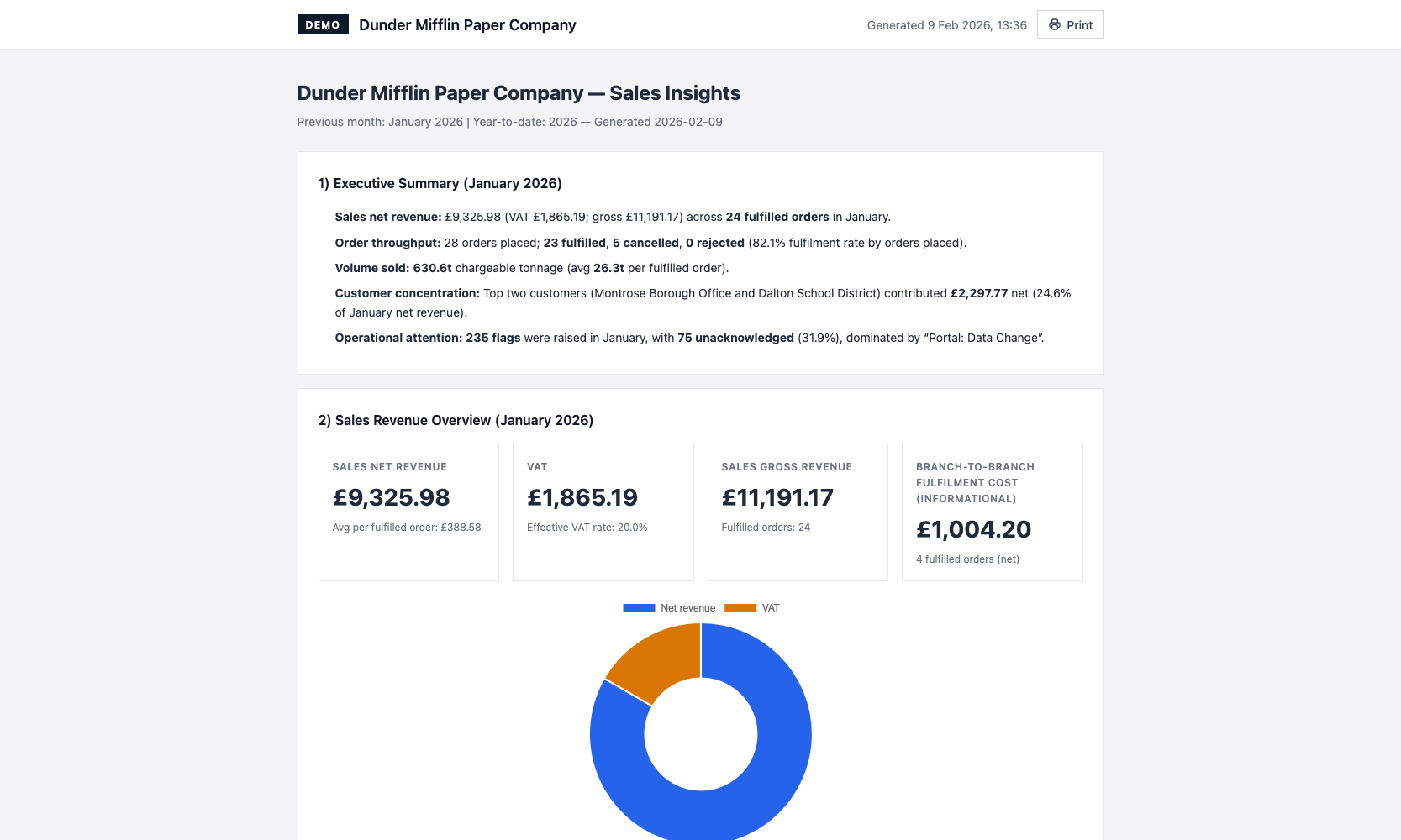
The automated reporting system is a tool we built to accelerate analysis of operational, delivery, and performance data. The system points at authoritative data sources and produces structured reports that surface patterns, identify problem areas, and highlight information requiring attention.
This is not a self-serve analytics platform. It does not replace human judgement. The system generates reports that teams review and act on. It reduces the manual effort required to identify trends and anomalies, enabling analysts and managers to focus on interpretation and decision-making rather than data extraction.
The Problem
Operational data accumulates continuously across systems. Delivery metrics, performance indicators, and system health data exist in databases, logs, and monitoring tools. Understanding this data requires regular analysis to identify trends, detect anomalies, and locate areas requiring investigation.
Manual reporting is time-consuming and inconsistent. Analysts must extract data, apply calculations, generate visualizations, and identify significant patterns. This process takes hours or days depending on data volume and complexity. The analysis quality varies based on individual attention and available time.
When reporting is manual, it happens less frequently than optimal. Weekly reports might reveal issues that developed days earlier. Monthly reports can miss time-sensitive patterns entirely. Teams need consistent visibility into operational data without dedicating staff to continuous manual analysis.
The Approach
We built the system to connect directly to existing data sources without requiring data migration or transformation. The system queries operational databases, retrieves relevant records, applies analytical methods, and generates reports automatically on a defined schedule.
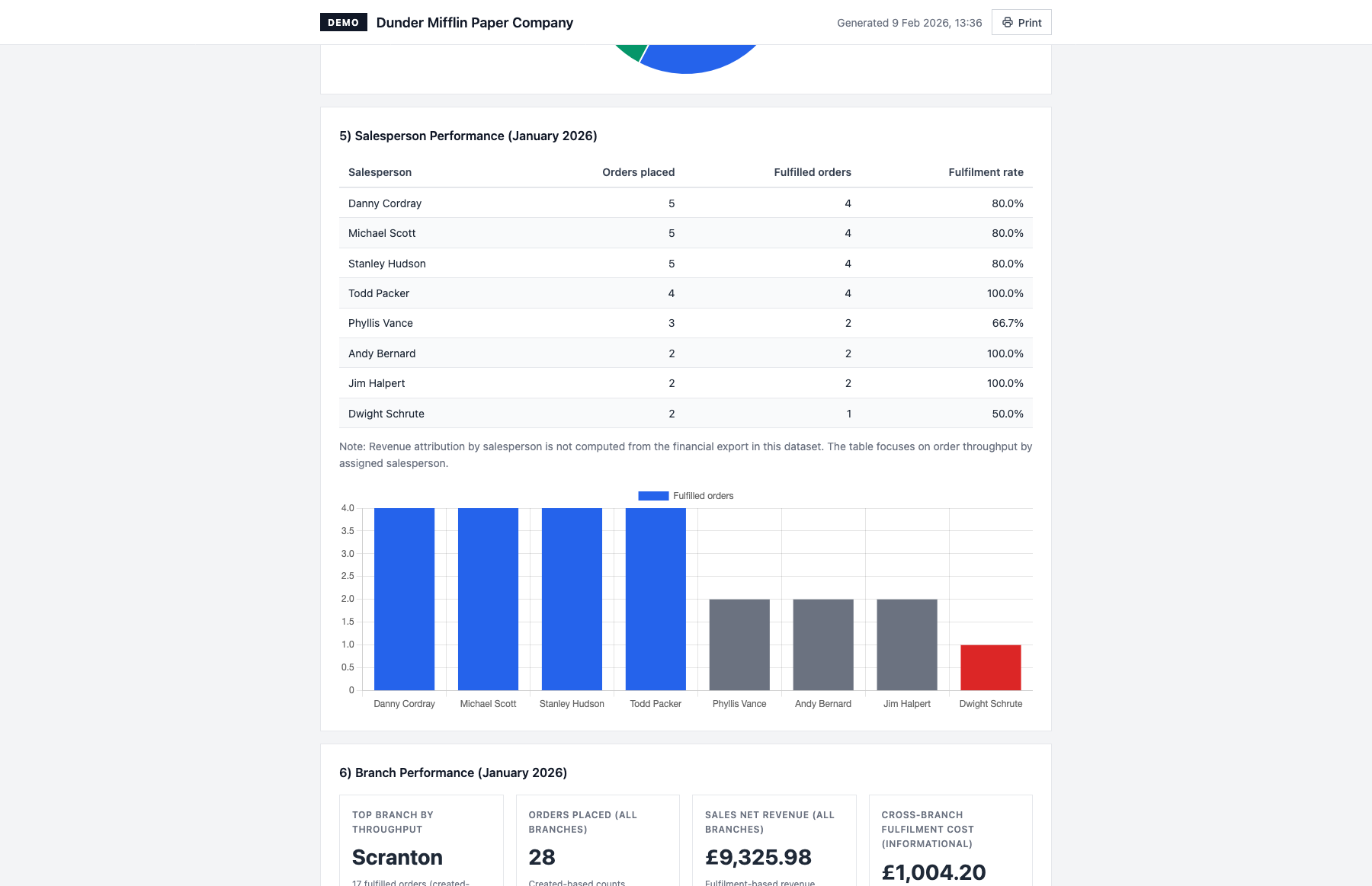
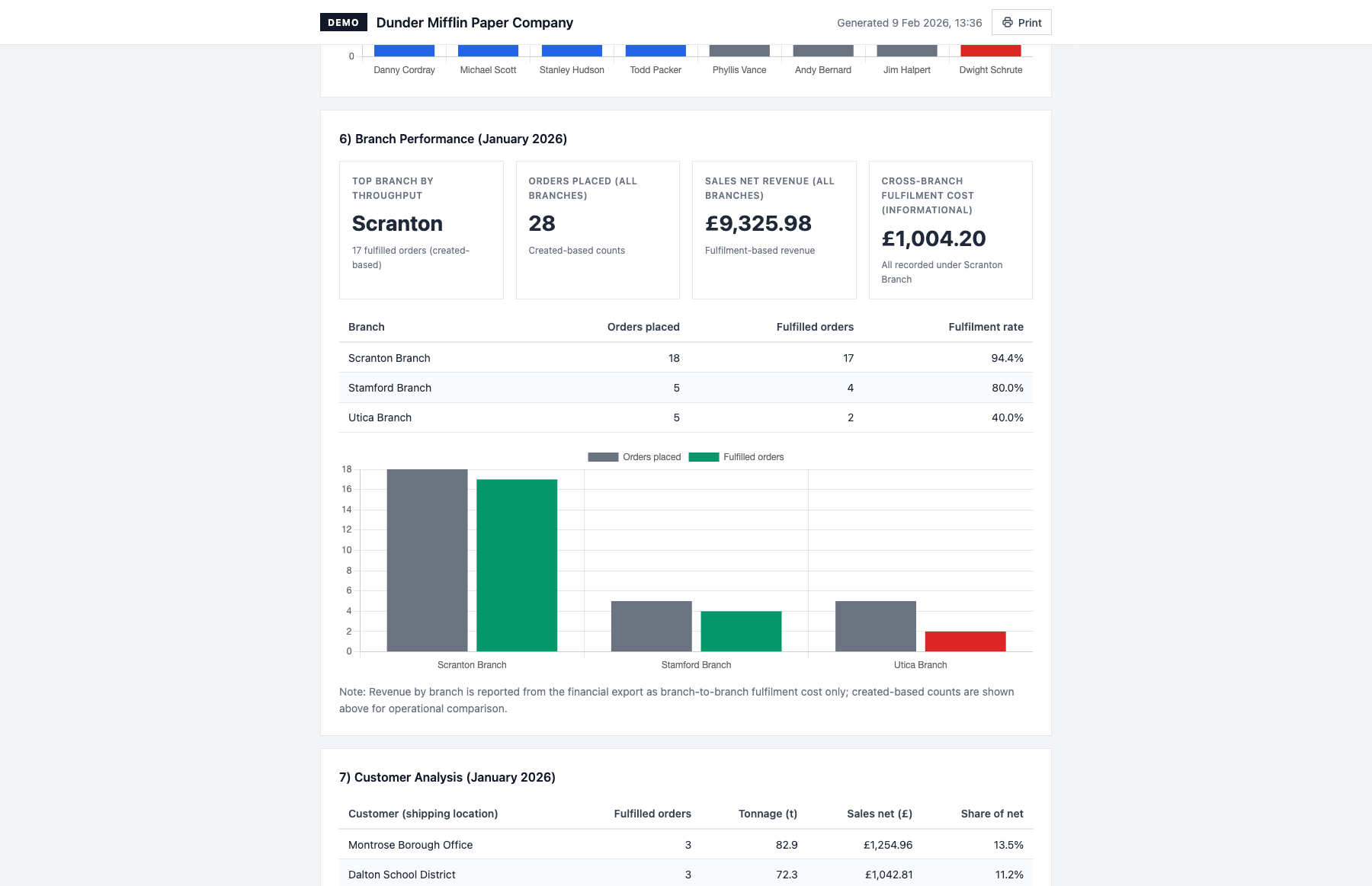
Reports focus on change detection and pattern recognition. The system identifies trends over time, compares current values to historical baselines, detects statistical anomalies, and flags metrics that cross defined thresholds. This surfaces information that teams can investigate further.
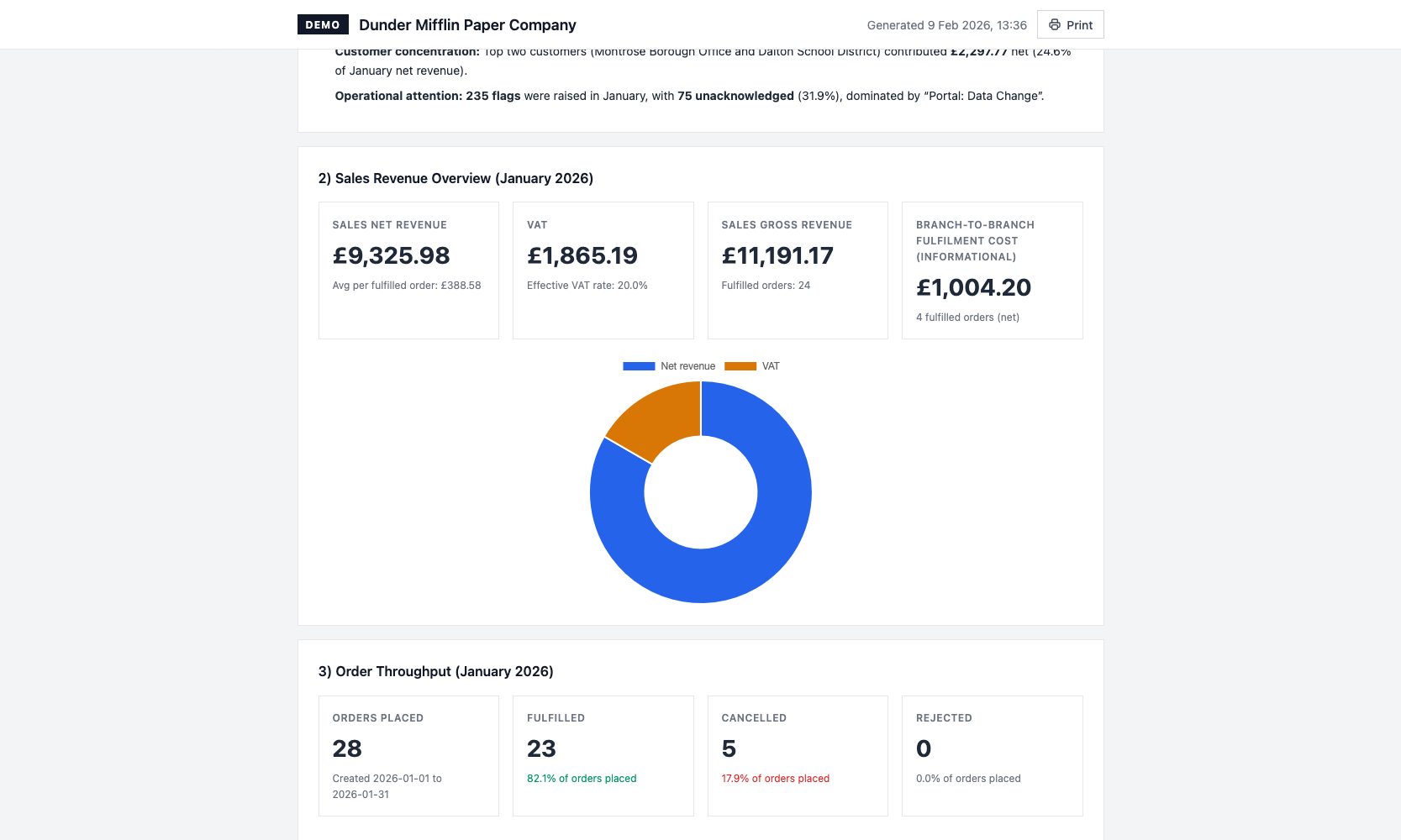
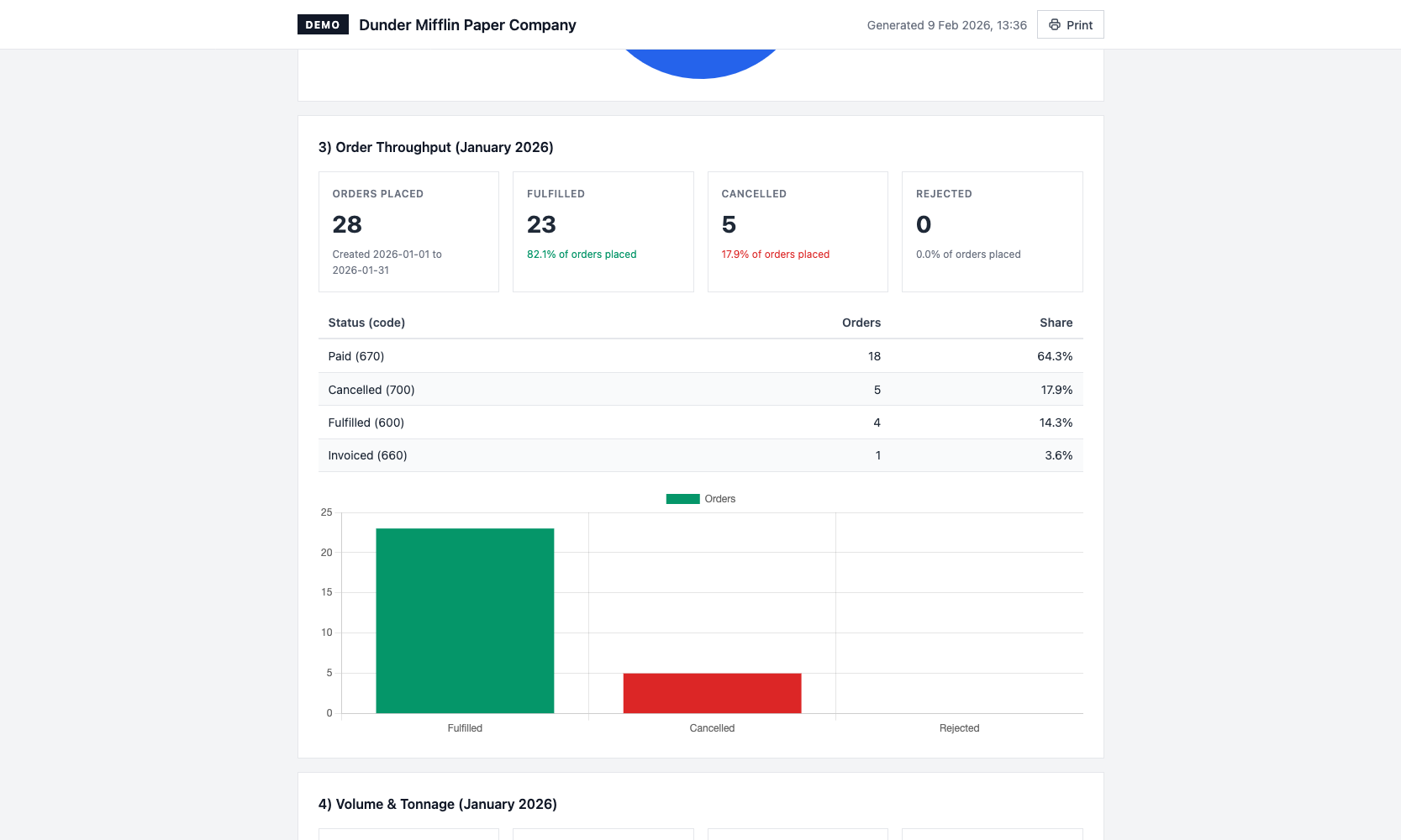
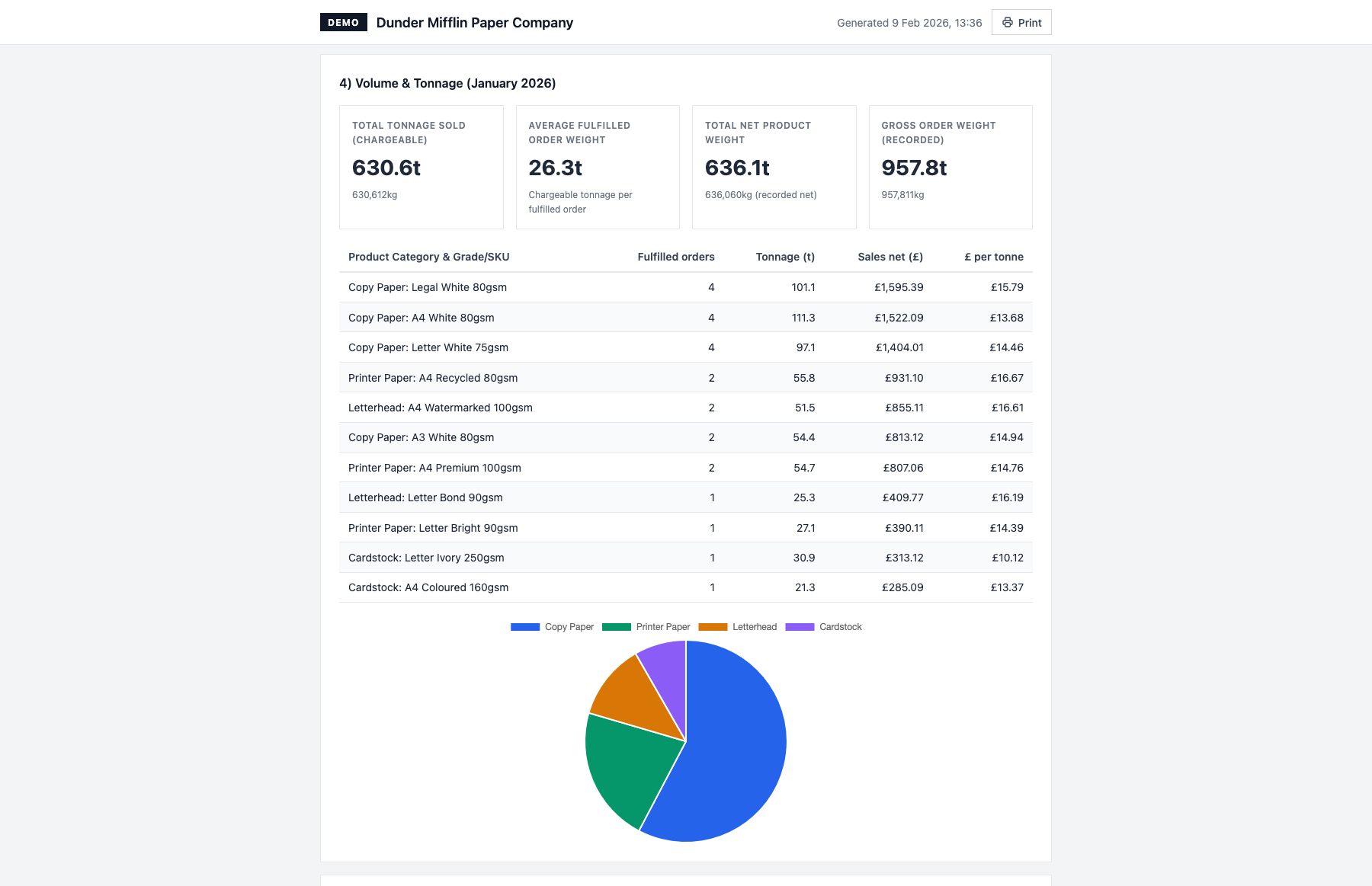
The output is structured and repeatable. Each report follows the same format, applies the same analytical methods, and presents findings consistently. This enables direct comparison across time periods and reliable tracking of how identified issues develop or resolve.
How Automated Reporting Works
The system runs on a configured schedule, typically daily or weekly depending on data characteristics. When a report cycle begins, the system queries the designated data sources for the analysis period. It retrieves raw data, applies analytical transformations, and generates visualizations and summary statistics.
For trend analysis, the system compares current period metrics against historical data. It calculates rate of change, identifies acceleration or deceleration, and highlights sustained increases or decreases. These patterns indicate where operational characteristics are shifting and may require attention.
Anomaly detection uses statistical methods to identify values that deviate significantly from expected ranges. The system flags these deviations with severity indicators based on the degree of variance. Not every anomaly represents a problem, but each warrants review to determine if investigation is needed.
Reports are delivered to designated team members through existing communication channels. Recipients review the findings, determine which patterns require investigation, and coordinate appropriate responses. The system provides the analytical groundwork; humans make the decisions about what action to take.
Why This Matters
Automated reporting provides consistent visibility into operational data without continuous manual effort. Teams receive regular analysis that identifies areas requiring attention. This early detection enables faster response to developing issues before they become critical.
The system reduces analysis workload but does not eliminate the need for human expertise. Analysts spend less time on data extraction and calculation, more time on interpretation and investigation. The reports highlight where to look; experienced staff determine what they find and what to do about it.
Repeatability ensures that analysis methods remain consistent over time. The same analytical approach applies to every reporting period. This eliminates variation introduced by different analysts or changing manual processes. Trends and comparisons remain valid because the underlying methodology is stable.
We use this system internally for monitoring our own operational metrics. It is not a demonstration or concept. The reports it generates inform actual operational decisions. This practical deployment demonstrates how automated analysis can function as a support tool for informed decision-making in production environments.