
Spaces: Customer Project Knowledge
An internal system that consolidates customer project context across emails, meetings, specifications, and decisions into a queryable knowledge base.
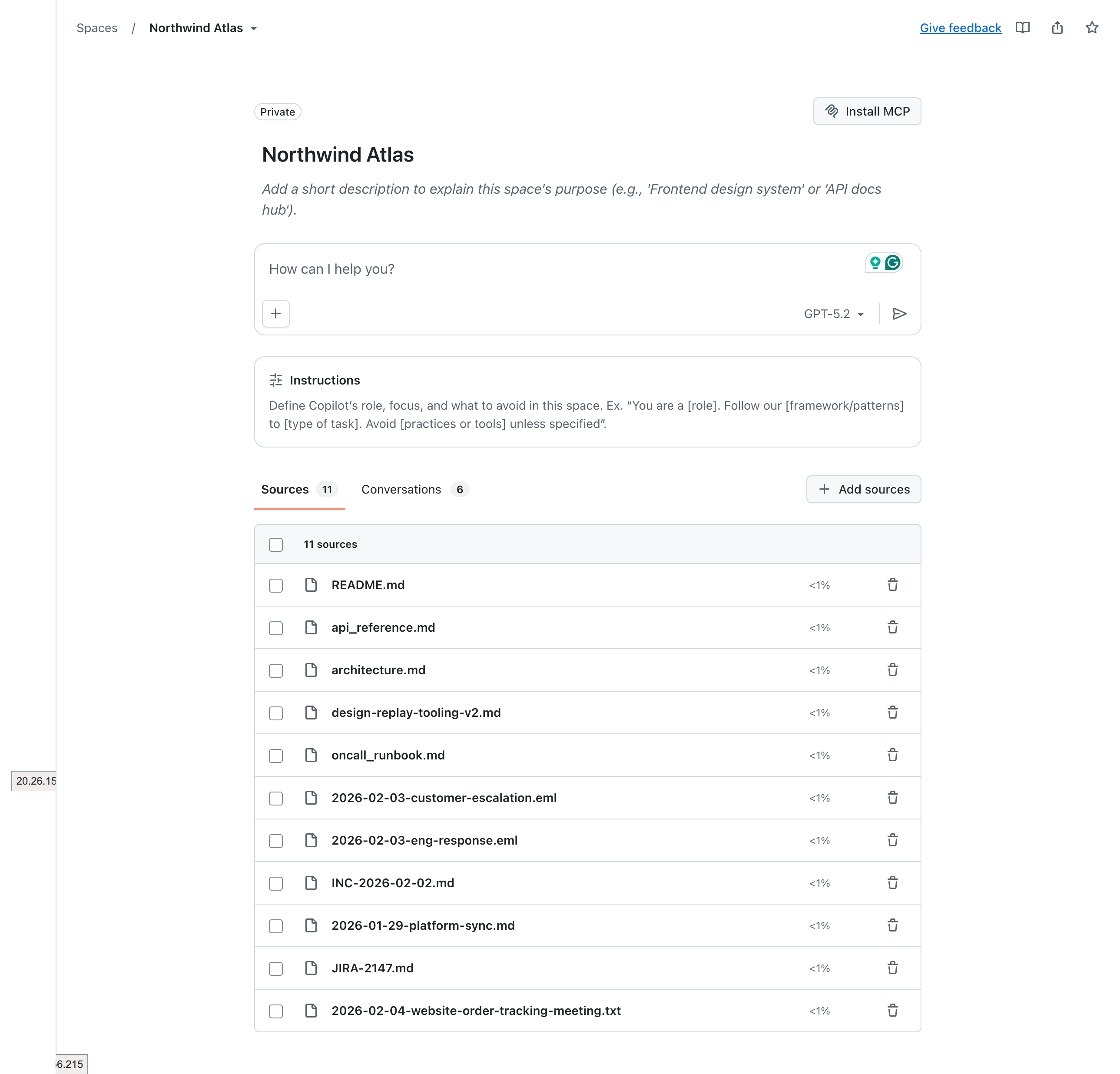
Overview
Spaces is the system we built to address a specific operational challenge at Askew Brook. When working on technical projects for customers, the project lifecycle spans initial contact through specification, quoting, requirements gathering, build phases, and ongoing communication. This generates substantial context across multiple channels and formats.
We needed a way to store this distributed information and interact with it directly. Spaces provides this capability, enabling developers and project managers to query project history and retrieve specific decisions with their full context.
The Problem
Technical projects accumulate information across numerous sources. Email threads document early discussions. Specification documents capture requirements. Meeting transcripts record decisions and their rationale. Teams calls surface additional context. This information remains scattered and difficult to access when needed.
Developers frequently need to understand why specific decisions were made. Project managers need to locate when commitments were established. The traditional approach requires searching through email archives, document folders, and meeting notes manually. This is time-consuming and often incomplete.
The Approach
We evaluated available solutions and selected an existing platform rather than building from scratch. The system needed to operate on uploaded documents only, without requiring external data access. It needed to provide source attribution for every answer.
Each customer project gets its own space. We upload relevant documents as they are created: specifications, email threads, meeting transcripts, technical decisions, and project correspondence. The system indexes these documents and makes them queryable.
The system operates similarly to general-purpose AI assistants, but it only examines the specific documents we provide. This ensures responses are grounded in actual project history rather than general knowledge.
How Spaces Works
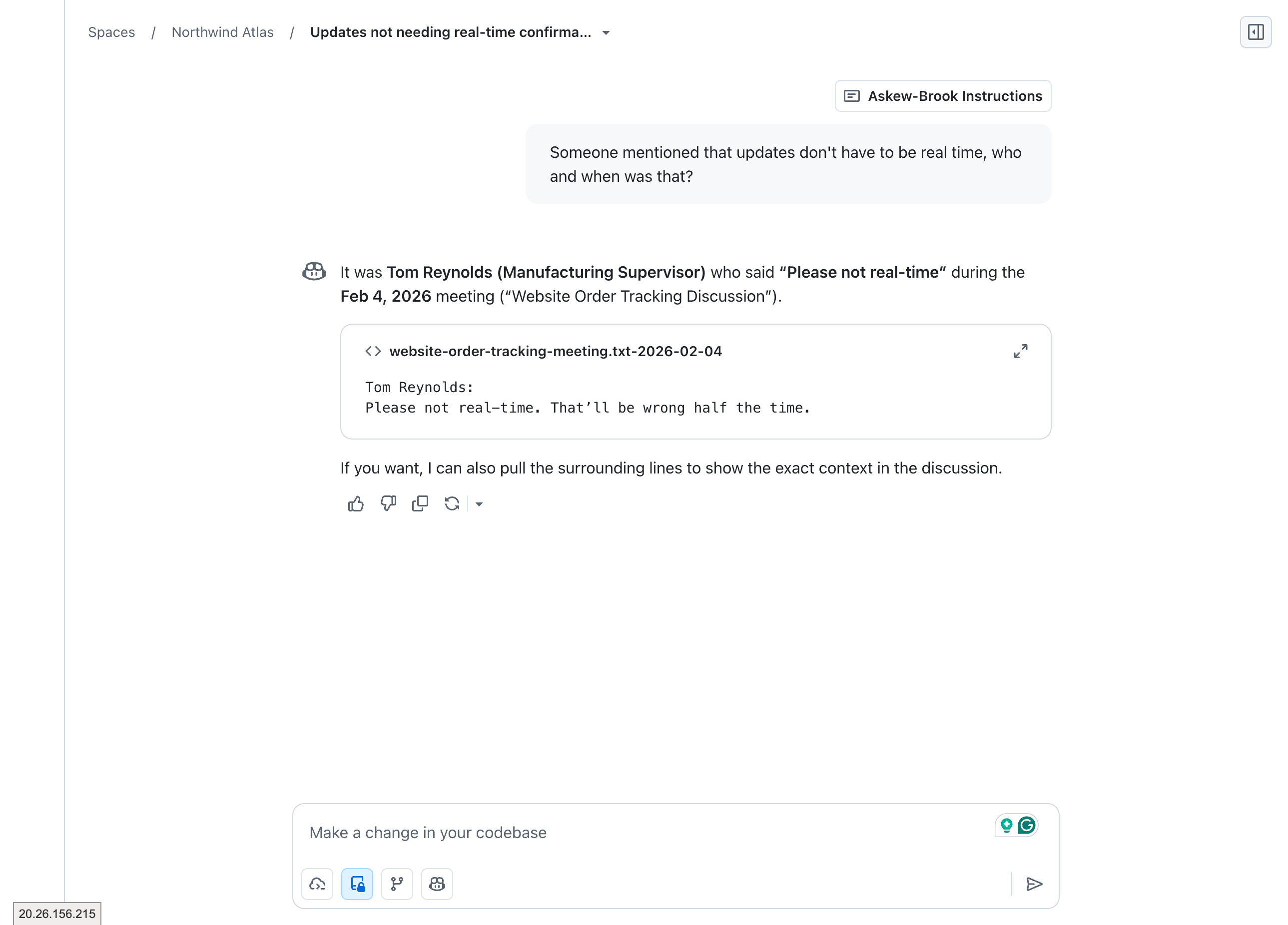
When a developer needs context on a decision, they can query the space directly. For example: "Why did we decide not to implement real-time updates?" The system searches the uploaded documents, identifies relevant passages, and provides the answer with attribution.
In one actual case, the query revealed that Linda Perez, the operations manager, decided updates should not be real-time. The system cited the specific meeting transcript where this was discussed, providing both the decision and its context.
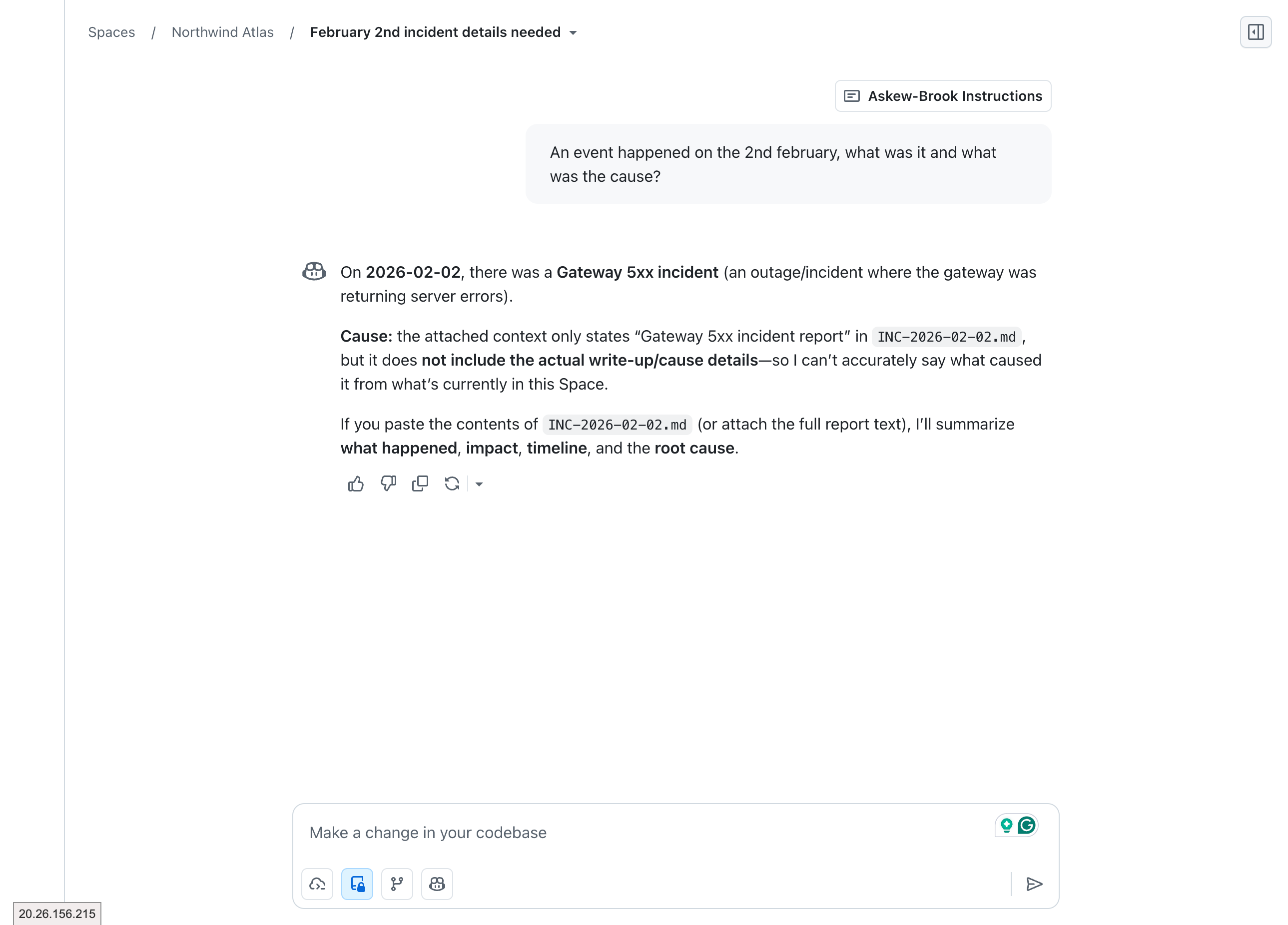
For incident tracking, queries like "There was an outage on 2nd of Feb" return the documented details of what occurred, when, and what actions were taken. The system indicates which documents contain this information, enabling rapid access to full records.
This is particularly valuable during active development. When decisions were made weeks or months earlier, developers can retrieve the rationale without interrupting colleagues. When they need additional context beyond what the system provides, they know exactly who to contact.
Why This Matters
Spaces reduces the friction in accessing project context. Developers can continue work without waiting for colleagues to locate information. Project managers can verify commitments and timelines directly. The entire team operates with consistent information.
The source attribution is essential. Spaces does not claim to know information; it points to where that information exists. This maintains accuracy and enables users to access full context when needed.
We use this system daily for our own operations. It is not a demonstration or proof of concept. It handles actual customer projects and real operational decisions. The system proves its value in continuous use.
This internal deployment informs our understanding of how similar systems can be implemented in client environments. We know the operational requirements, the integration points, and the practical limitations because we address them in our own work.